Disclosure: This post may contain affiliate links. If you click and make a purchase, I may earn a small commission at no extra cost to you.
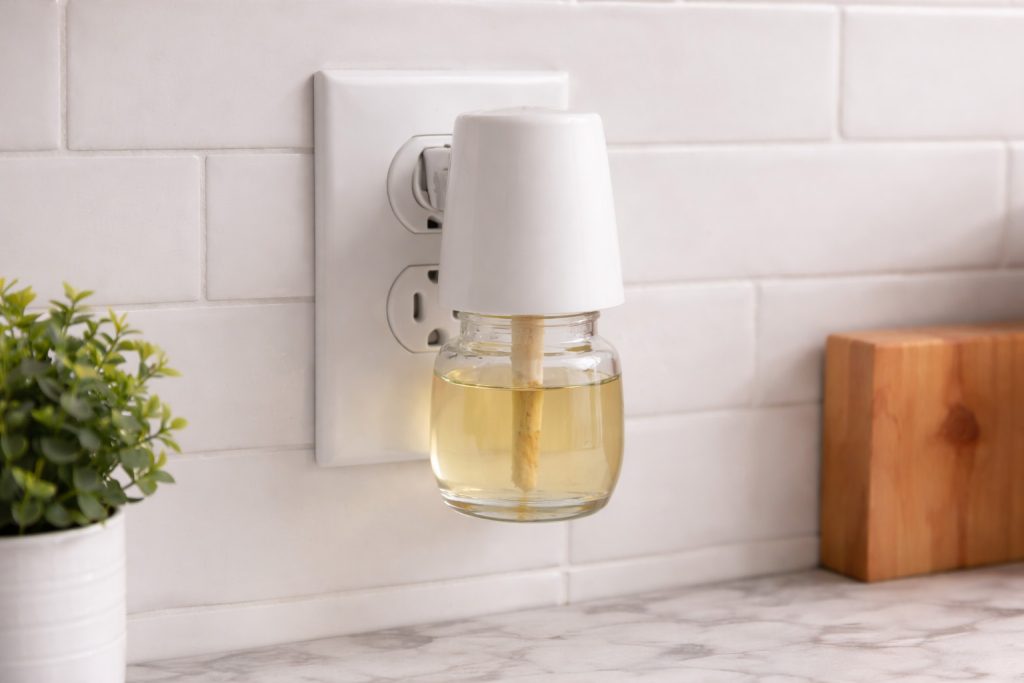
If your DIY plug-in refill smells strong at first but fades within a few days, you’re not imagining things.
This is one of the most common frustrations with homemade plug-in refills — and it almost always comes down to formulation.
Plug-ins stop working when:
- The base evaporates too quickly
- The wick cannot draw liquid properly
- The fragrance concentration is unbalanced
- The mixture wasn’t designed for controlled heat
Let’s break down exactly what’s happening — and how to fix it.
The Most Common Reason DIY Plug-Ins Fail
Most DIY recipes focus only on fragrance strength.
They assume:
“More essential oil = stronger scent.”
That’s not how heated plug-in systems work.
Plug-ins rely on controlled evaporation.
When you use essential oils alone or mix fragrance incorrectly:
- The liquid burns off too quickly
- The wick dries out
- Diffusion becomes inconsistent
- The scent disappears in days
If you want the exact mixing method that prevents this, start here:
👉 The One Ingredient That Makes DIY Plug-In Refills Actually Work
Why Essential Oils Alone Are Not Enough
Essential oils are highly concentrated, but they are not designed to be used alone in heated plug-in devices.
Without a proper carrier:
- They evaporate unevenly
- They can overwhelm the wick
- They burn off quickly
- Scent longevity suffers
This is why many DIY refills smell strong for 24–48 hours… then fade.
The issue isn’t the oil quality.
It’s the lack of a stable base.
The Wick Problem Most DIY Recipes Ignore
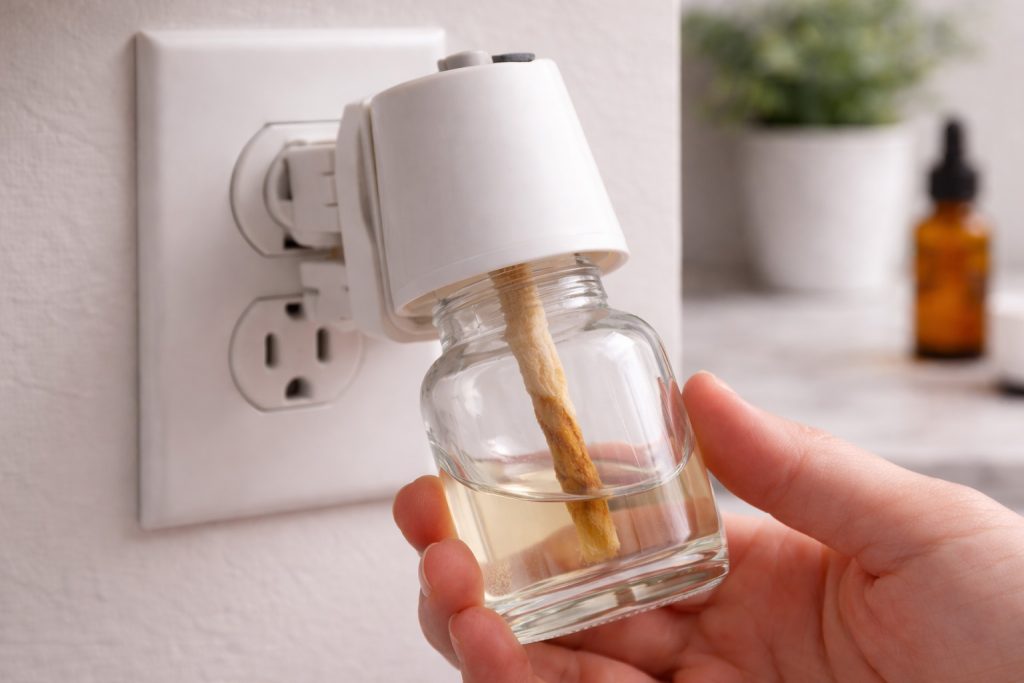
Inside every plug-in air freshener is a wick that draws liquid upward at a controlled rate. That wick is designed to work with a specific type of liquid consistency.
If the refill is too thin:
- It wicks too fast
- The fragrance burns off quickly
If the refill is too thick:
- The wick may struggle to absorb the liquid
- Scent release becomes inconsistent or stops entirely
Most DIY recipes never address this balance, which is why results can vary so widely.
If your mixture is properly balanced but the plug-in still isn’t diffusing correctly, the wick itself may be clogged or degraded. Over time, residue buildup can restrict liquid flow and weaken scent output.
👉 Check compatible replacement plug-in wicks on Amazon
That said, most performance problems are caused by an unbalanced formulation — not hardware failure.
A properly functioning refill needs:
- A carrier that supports steady wicking
- Oils blended at the correct ratio
- A liquid that can tolerate gentle, continuous heat
Why Plug-Ins Sometimes Smell Strong at First
At the beginning, excess fragrance sits near the top of the wick.
When first plugged in, that concentration releases quickly — creating the illusion of strong performance.
But once that top layer burns off:
- There’s no balanced base to sustain diffusion
- The wick dries faster
- The scent drops dramatically
This is a formulation issue, not a device failure.
How to Make DIY Plug-In Refills Last Longer
To improve longevity:
- Use a proper carrier oil
- Avoid water or alcohol mixtures
- Maintain a controlled fragrance concentration
- Follow measured ratios instead of guessing
The most reliable formula is:
75% fractionated coconut oil
25% fragrance oil
Fractionated coconut oil (FCO):
- Slows evaporation
- Supports proper wick function
- Maintains stable diffusion
- Reduces clogging
If you don’t already have a stable base oil, this is the one that works best for plug-in refills:
👉 Check current price on Amazon
For the full step-by-step mixing breakdown, start here:
👉 The One Ingredient That Makes DIY Plug-In Refills Actually Work
When You Might Need to Replace the Wick
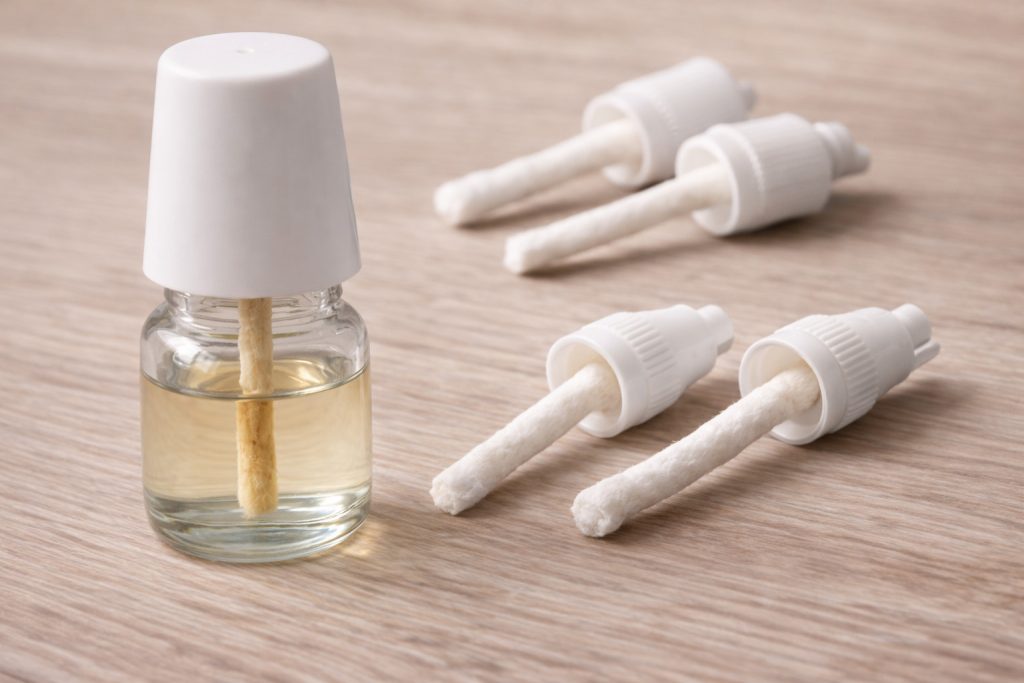
If your mixture is correct but performance is still weak:
- The wick may be clogged
- Residue buildup may be restricting flow
- The refill bottle may not be wicking properly
Over time, wicks can degrade.
Replacing the wick can restore performance — but most longevity problems stem from improper mixture ratios, not hardware failure.
closer to store-bought versions without the synthetic additives.
The Bottom Line
DIY plug-in refills do not stop working because the idea is flawed.
They stop working because:
- The formulation is unbalanced
- The wrong base is used
- Evaporation isn’t controlled
When you use the correct carrier oil and maintain a 75/25 ratio, DIY refills can last significantly longer and perform more consistently.
If you’re also concerned about safety, read this next:
👉 Are DIY Plug-In Refills Safe? What You Should and Shouldn’t Use
And if you want the exact formula that fixes most performance issues:
👉 The One Ingredient That Makes DIY Plug-In Refills Actually Work
Related DIY Plug-In Guides
- The One Ingredient That Makes DIY Plug-In Refills Actually Work
- Are DIY Plug-In Refills Safe? What You Should and Shouldn’t Use