Disclosure: This post may contain affiliate links. If you click and make a purchase, I may earn a small commission at no extra cost to you.
You replaced the refill, plugged it back in, and… nothing. No scent. Or maybe a faint hint for an hour, then silence.
This is one of the most searched plug-in problems online, and the fix is usually simpler than you think. Whether you’re using a store-bought Air Wick refill or a DIY version, the troubleshooting steps are the same.
Let’s walk through every common cause — from the easiest fixes to the ones that require a replacement part.
Check the Basics First
Before assuming the device is broken, rule out the simple stuff:
Is the outlet working? Plug something else into the same outlet — a phone charger or lamp. If nothing powers on, the outlet itself may be the problem, not the plug-in.
Is the device warm? After 10 minutes plugged in, the unit should feel slightly warm to the touch. If it’s completely cold, the heating element may have failed. If it’s warm but there’s no scent, the issue is almost certainly the refill, not the device.
Did you remove the cap from the refill? This sounds obvious, but some refills — especially store-bought ones — have a small plastic cap or seal at the top that must be removed before inserting. If the cap is still on, the wick cannot make contact with the liquid.
The Wick Is the Most Common Failure Point
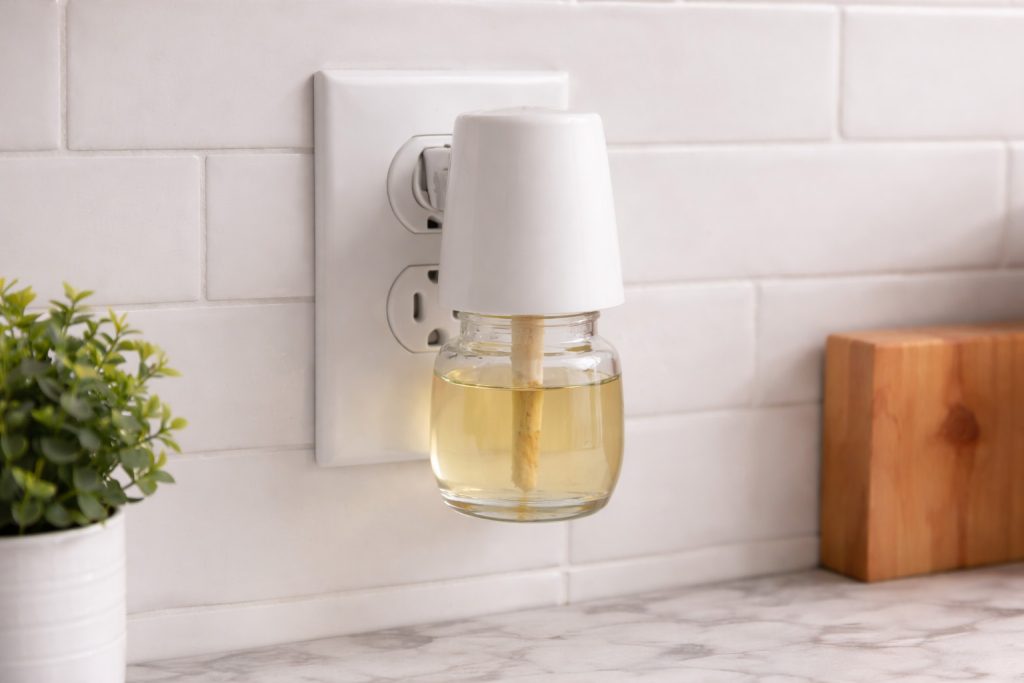
Inside every plug-in air freshener is a small wick that draws liquid upward into the heating element. When scent stops after a refill, the wick is almost always involved.
The wick may be clogged. Over time, fragrance oils leave behind residue that builds up inside the wick fibers. This restricts liquid flow and weakens scent output — even with a brand new refill full of liquid. The device heats up, but nothing reaches the surface to diffuse.
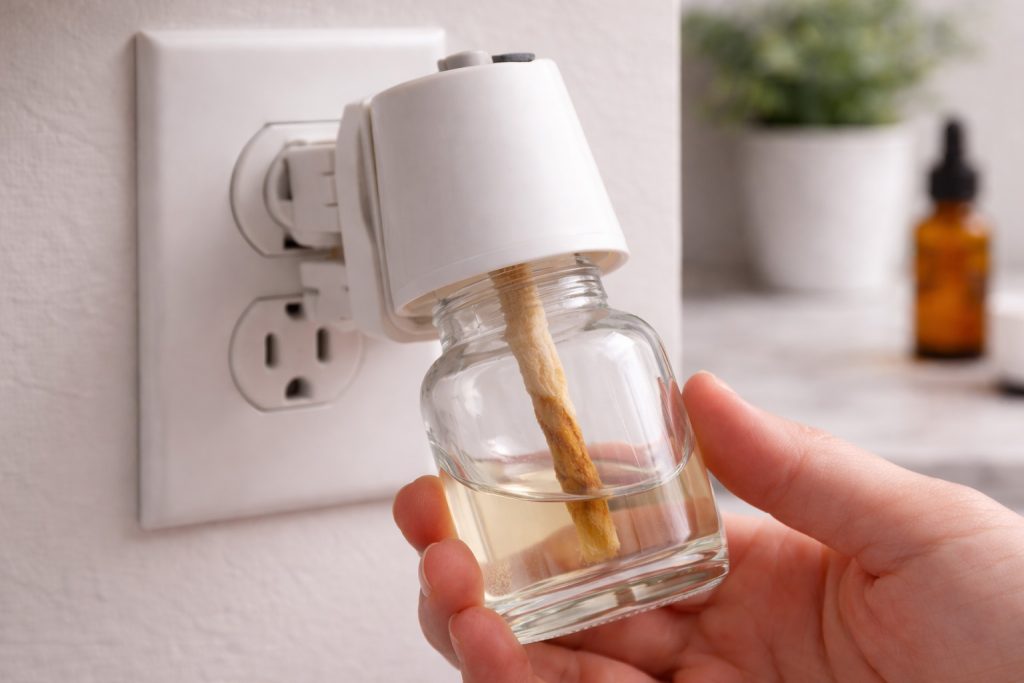
The wick may not be seated properly. If you removed the wick during refilling or if it shifted during transport, it may not be making full contact with the liquid. Pull the refill out, check that the wick sits firmly in the bottle opening, and reinsert.
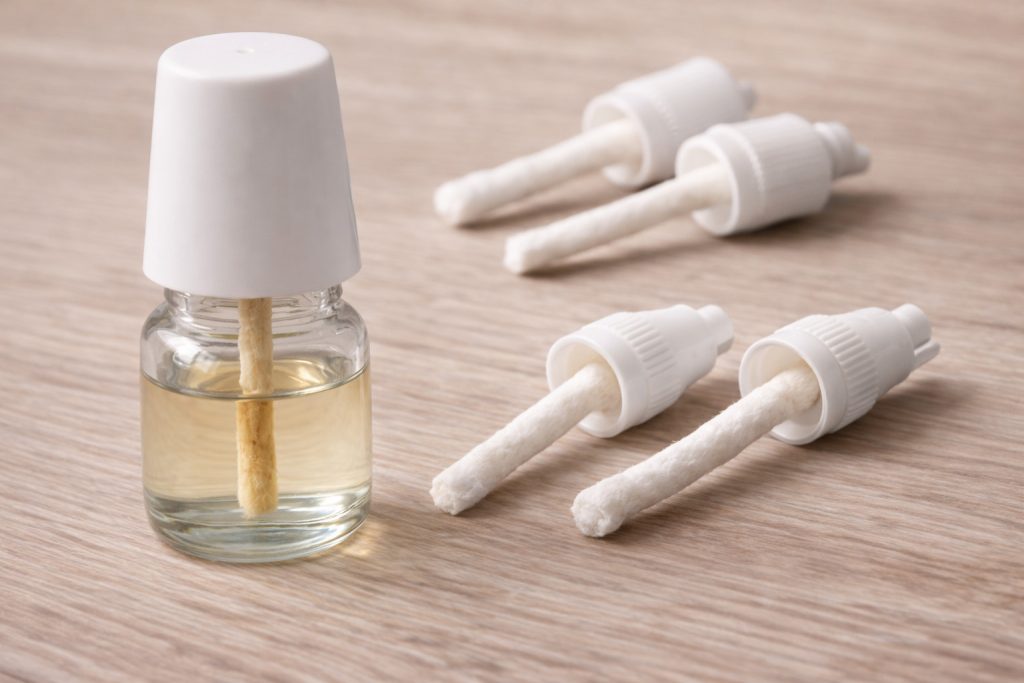
The wick may need replacement. Wicks do not last forever. After several refill cycles, the fibers degrade and stop absorbing efficiently. If you’ve used the same wick through three or more refills, replacing it is the cheapest and most effective fix.
👉 Check compatible replacement plug-in wicks on Amazon
Store-Bought Refills vs DIY Refills: Different Problems
If you’re using a store-bought Air Wick refill and it’s not working:
The most likely cause is an old or defective unit. Air Wick plug-in warmers have a limited lifespan — typically 12 to 18 months of continuous use before the heating element weakens. If your device is older than a year and a new refill produces no scent, the warmer itself may need replacing. A new warmer is inexpensive and often comes bundled with a refill.
👉 Check current Air Wick warmer + refill bundles on Amazon
If you’re using a DIY refill and it’s not working:
The most common cause is formulation — specifically, missing a carrier oil. Pure essential oils evaporate too quickly in heated devices. Without a carrier oil to slow diffusion, the liquid burns off in 24 to 48 hours and the wick dries out.
The fix is fractionated coconut oil. It slows evaporation, supports steady wicking, and keeps scent releasing consistently for 10 to 14 days instead of 2.
For the full formula:
👉 The One Ingredient That Makes DIY Plug-In Refills Actually Work
Why Plug-Ins Work for a Day Then Stop
This is the most frustrating version of the problem — the refill smells great for the first day, then fades to nothing.
Here is what’s actually happening:
When you first insert a fresh refill, excess fragrance sits at the top of the wick. The heating element hits that concentrated layer and releases a burst of scent. It smells perfect.
But once that initial layer burns off, the wick needs to draw new liquid upward continuously. If the liquid is too thin (like pure essential oil or water-based mixtures), it wicks too fast, evaporates almost immediately, and the scent disappears.
If the liquid is too thick or contains ingredients that leave residue, the wick clogs and flow stops entirely.
The ideal refill consistency sits between those extremes — and the carrier oil you use determines that balance.
For a deeper explanation of why this happens:
👉 Why DIY Plug-In Air Fresheners Stop Working After a Few Days
The Flip Trick That Sometimes Works
If your plug-in suddenly stopped throwing scent but the refill bottle is still full:
- Unplug the device
- Flip it upside down for 30 seconds
- Plug it back in
This resets wick saturation by letting gravity pull liquid back into the wick fibers. It does not fix a clogged or degraded wick, but it can temporarily restore scent when the wick has developed an air gap.
If the flip trick restores scent for a few hours and then it fades again, the wick is likely clogged and needs replacing.
Outlet Placement Matters More Than You Think
A plug-in air freshener in a high wall outlet near the ceiling will always underperform compared to one in a lower outlet.
Warm scented air rises. If the device is already at ceiling height, the fragrance rises into dead air space above head level where nobody can smell it.
For best scent throw:
- Use outlets that are waist height or lower
- Avoid outlets blocked by furniture
- Place the device near doorways or air paths where movement carries scent through the room
- In large rooms, consider using two plug-ins on opposite walls rather than maxing out the intensity on one
When to Replace the Device
Replace the plug-in unit (not just the refill) if:
- The device does not feel warm after 10 minutes
- You have tried a new wick AND a new refill with no improvement
- The unit is older than 12 to 18 months
- You see discoloration, cracking, or warping on the plastic housing
Most plug-in warmers are inexpensive — and replacing a worn-out device is almost always cheaper than continuing to waste refills on a unit that cannot heat properly.
👉 Check current Air Wick warmer + refill bundles on Amazon
DIY Refill Formula Quick Reference
If you’re making your own plug-in refills, here is the formula that produces the most consistent results:
75% fractionated coconut oil + 25% fragrance or essential oil
This ratio:
- Slows evaporation to match wick draw speed
- Prevents wick clogging from overly concentrated oils
- Maintains scent release for 10 to 14 days
- Works in any standard heated plug-in device
If you do not already have fractionated coconut oil:
👉 Check current price on Amazon
For the full step-by-step mixing guide:
👉 The One Ingredient That Makes DIY Plug-In Refills Actually Work
Safety Check Before You Troubleshoot
Before refilling any plug-in device — especially with DIY mixtures — make sure you’re using ingredients rated for heat.
Not all essential oils or fragrance oils are safe in heated devices. Some break down and release harmful compounds. Others leave residue that can damage the unit or create a fire risk.
For the full safety guide:
👉 Are DIY Plug-In Refills Safe? What You Should and Shouldn’t Use
The Bottom Line
A plug-in that stops working after a refill is almost never a total device failure. In order of likelihood:
- The wick is clogged or degraded — replace it
- The refill formula is wrong (for DIY) — add fractionated coconut oil
- The outlet placement is poor — move it lower
- The device is old — replace the warmer
Start with the wick. It’s the cheapest fix and solves the problem more often than any other step.
Related Guides
- Why DIY Plug-In Air Fresheners Stop Working After a Few Days
- The One Ingredient That Makes DIY Plug-In Refills Actually Work
- Are DIY Plug-In Refills Safe? What You Should and Shouldn’t Use