If you’ve made homemade vanilla extract and found that it still tastes weak weeks or even months later, you’re not alone. This is one of the most common frustrations people have with DIY vanilla — and it’s also one of the most misunderstood.
Most people assume weak vanilla means they did something wrong. The recipe must be off. The beans must be bad. It just needs more time.
In reality, homemade vanilla usually stays weak for very specific, predictable reasons. And once you understand them, the problem stops being mysterious.
This article breaks down what actually affects vanilla flavor, why waiting longer often doesn’t fix it, and how to tell whether your vanilla will ever improve at all.
Time Alone Does Not Create Strength
One of the biggest myths around homemade vanilla is that time automatically equals strength. While time does matter, it only amplifies what’s already there.
If your extract starts weak, letting it sit longer usually just gives you more weak vanilla.
Time helps when:
- Enough vanilla compounds are present to extract
- The alcohol is strong enough to pull those compounds
- The bean-to-alcohol ratio is correct
If any of those factors are off, time can’t compensate. It simply preserves the imbalance.
This is why some homemade vanilla smells pleasant but still tastes thin. Aroma develops faster than depth, and without enough dissolved vanillin and supporting compounds, the flavor never fully builds.
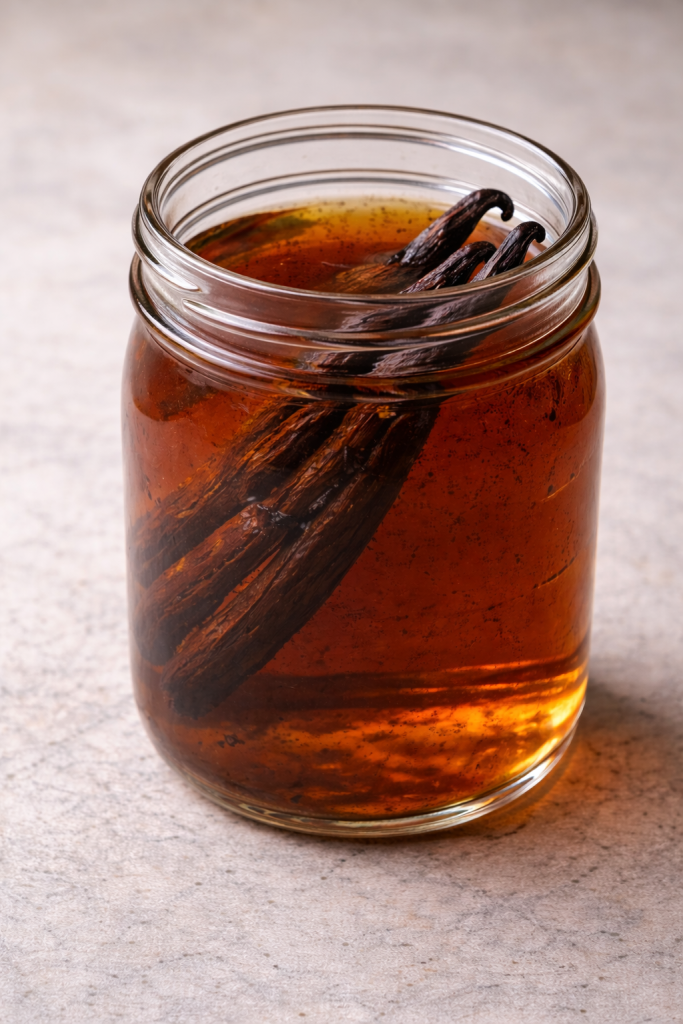
The Bean-to-Alcohol Ratio Matters More Than Most Recipes Admit
Many popular recipes dramatically underuse vanilla beans. They rely on the idea that patience will make up the difference.
It won’t.
For baking-grade vanilla, strength is determined primarily by how much vanilla material is available to extract — not how long it sits.
If you want a deeper explanation of correct ratios and why most DIY recipes fall short, this is covered in detail in How to Make Homemade Vanilla Extract (Better Than Store-Bought).
When the ratio is too low:
- The extract smells okay but tastes flat
- Flavor disappears in baked goods
- The vanilla never reaches store-bought strength
This is the most common reason homemade vanilla stays weak indefinitely.
Bean Quality Affects Development, Not Just Price
Another misconception is that all vanilla beans behave the same. They don’t.
Different grades, curing levels, and moisture contents extract differently. Some beans release flavor quickly but plateau early. Others develop more slowly but reach greater depth.
Choosing the wrong type of bean can make it seem like your vanilla has stalled, even when you followed the recipe closely.
If you want to understand how bean selection impacts flavor strength and long-term development, see Best Vanilla Beans for Homemade Extract (Grade A vs Grade B).
In short:
- Softer, moister beans are easier for beginners
- Drier beans often need more alcohol contact and time
- Bean choice affects how flavor develops, not just how fast
Alcohol Strength Sets the Ceiling
Alcohol isn’t just a preservative. It’s the extraction engine.
If the alcohol used is too weak, it cannot fully dissolve the compounds responsible for strong vanilla flavor. This creates an artificial ceiling — no matter how long you wait, the extract will never pass a certain point.
This is why some homemade vanilla smells rich in the bottle but underperforms in recipes. The volatile compounds escaped into the aroma, but the deeper flavor compounds never fully transferred.
Once that ceiling is set, waiting longer won’t raise it.
Why Vanilla Sometimes Smells Stronger Than It Tastes
Smell and taste develop differently.
Your nose detects volatile compounds quickly, even at low concentrations. Your palate needs density and balance.
This disconnect causes people to believe their vanilla is stronger than it actually is. The aroma suggests progress, but the flavor hasn’t caught up — and may never catch up without changes.
This is one reason homemade vanilla is often praised early, then quietly disappointing later.
What Weak Vanilla Is Not Caused By
To avoid chasing the wrong fixes, it helps to rule out a few common myths:
- It is not caused by artificial vanilla ingredients or additives
- It is not related to food myths like animal-derived flavorings
- It is not fixed by shaking the bottle more often
If you’re curious about one of the most persistent vanilla myths and why it continues to circulate, you can read No, Artificial Vanilla Is Not Made From Beaver Glands (Here’s the Truth).
That misconception has nothing to do with why homemade vanilla lacks strength.
How to Tell If Your Vanilla Will Ever Improve
Ask yourself three questions:
- Did I use enough beans for the amount of alcohol?
- Is the alcohol strong enough for full extraction?
- Are the beans appropriate for long-term development?
If the answer to any of these is no, the vanilla may never reach the strength you expect — regardless of how long it sits.
At that point, the solution isn’t more patience. It’s correction.
The Takeaway
Homemade vanilla stays weak because of limitations set early in the process. Time doesn’t create flavor from nothing — it only reveals whether the foundation was strong enough to begin with.
When the ratios are correct, the beans are appropriate, and the alcohol can do its job, homemade vanilla does improve. When they aren’t, it simply plateaus.
Understanding this prevents wasted time, wasted ingredients, and frustration — and it allows homemade vanilla to perform the way people expect it to.