Disclosure: This post may contain affiliate links. If you click and make a purchase, I may earn a small commission at no extra cost to you.
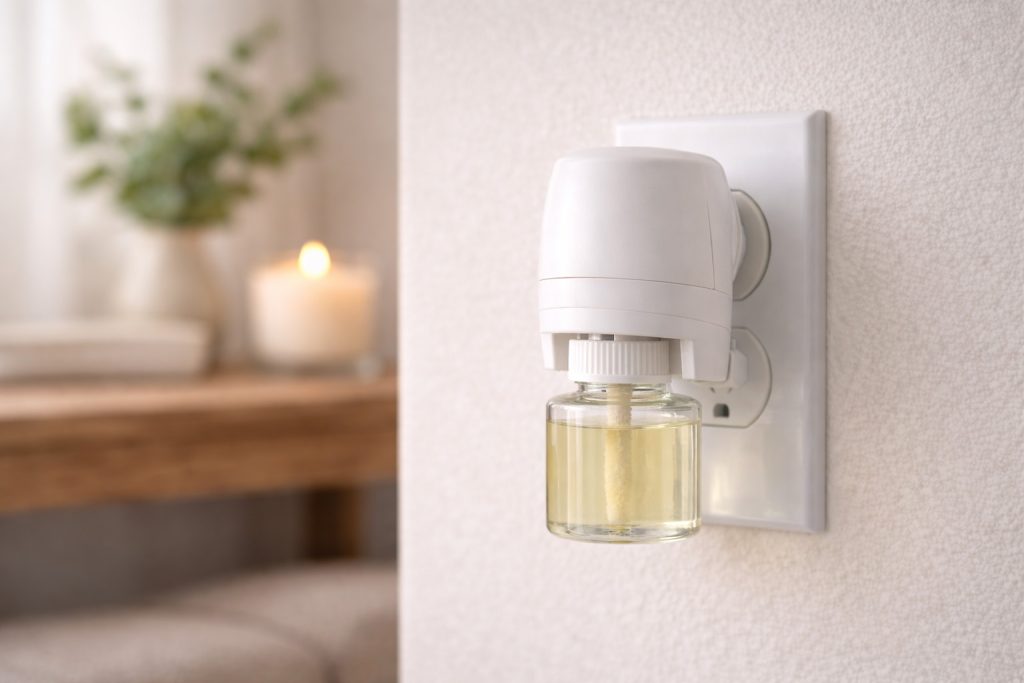
If your DIY plug-in refills smell great at first but fade within just a few days, the issue usually isn’t your fragrance oil — it’s the base.
Most homemade recipes skip one simple ingredient that controls evaporation and helps the scent last longer.
That ingredient is fractionated coconut oil.
In this guide, you’ll learn:
- Why most DIY plug-in refills lose strength so quickly
- How fractionated coconut oil improves scent longevity
- The exact mixing ratio that works best
- The best fractionated coconut oil to use for plug-in refills
The Ingredient That Makes the Difference
If you want your refill to last more than a few days, this is the base that works best:
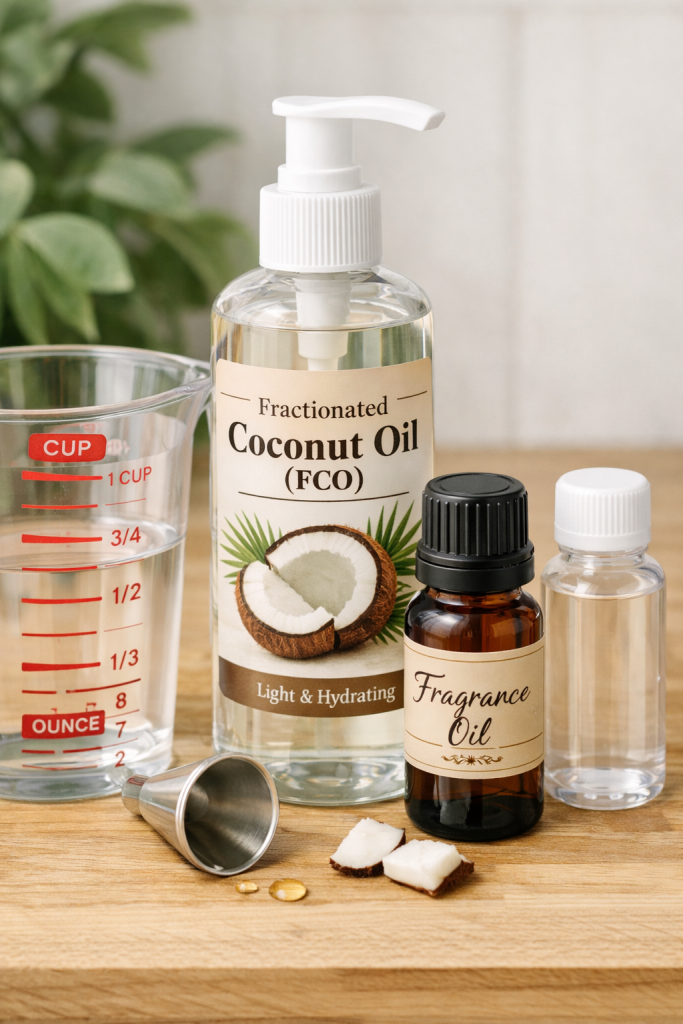
Fractionated Coconut Oil (FCO)
Fractionated coconut oil is lightweight, odorless, and designed to carry fragrance evenly without clogging your plug-in unit. Unlike thicker oils, it allows consistent diffusion while slowing evaporation.
🔥 Quick Fix: Make Your DIY Plug-In Refill Last Longer
Use this simple ratio:
- 75% Fractionated Coconut Oil
- 25% Fragrance Oil
Shake thoroughly for 10–15 seconds before inserting into your plug-in device.
This balance slows evaporation while still delivering strong scent throw.
If you don’t already have it, this is the fractionated coconut oil that works best:
Why DIY Plug-In Refills Stop Working So Quickly
Most homemade recipes focus only on fragrance strength. But plug-in units rely on controlled evaporation. If the base evaporates too quickly, the scent fades fast — no matter how strong the fragrance oil is.
There are three common problems:
- Using fragrance oil without proper dilution
- Using thick carrier oils that clog wicks
- Using alcohol-heavy mixtures that burn off too fast
The real issue is evaporation control.
The Role of the Base Oil
Plug-in air fresheners work by drawing liquid up through a wick and slowly diffusing it with heat. If the liquid is too thin, it evaporates too quickly. If it’s too thick, it won’t diffuse properly.
Fractionated coconut oil is ideal because it is:
- Lightweight and stable
- Nearly odorless (won’t alter fragrance profile)
- Slow-evaporating compared to alcohol
- Compatible with most plug-in refill bottles
This creates a controlled release instead of a short burst.
Typical DIY Refill vs Properly Balanced Refill
| Common DIY Blend | With Fractionated Coconut Oil |
|---|---|
| Fades in 2–3 days | Lasts 1–2+ weeks |
| Inconsistent scent | Even diffusion |
| Wasted fragrance oil | Efficient use of oils |
| Risk of clogging | Smooth wick performance |
The difference isn’t more fragrance — it’s a better base.
How to Mix Your Refill Correctly
- Measure 75% fractionated coconut oil into your refill bottle.
- Add 25% fragrance oil.
- Shake thoroughly for 10–15 seconds.
- Let the mixture settle before inserting into the plug-in unit.
For a standard 30 ml bottle:
- 22–23 ml Fractionated Coconut Oil
- 7–8 ml Fragrance Oil
Always avoid overfilling and ensure your plug-in unit is compatible with oil-based refills.
What to Look for When Buying Fractionated Coconut Oil
Not all carrier oils are the same. For plug-in refills, choose one that is:
- 100% pure fractionated coconut oil
- Clear and odorless
- Packaged in a bottle with a controlled pour spout
- Cosmetic or aromatherapy grade
This is the one that consistently works best:
One consistently reliable option is this fractionated coconut oil on Amazon.
Key Takeaways
- Most DIY refills fail because of improper evaporation control.
- Fractionated coconut oil acts as the ideal carrier base.
- A properly balanced blend prevents rapid evaporation and weak scent output.
- Using the right base oil improves both longevity and performance.
If you want your DIY refills to actually last, start with the right base:
👉 Check current price on Amazon